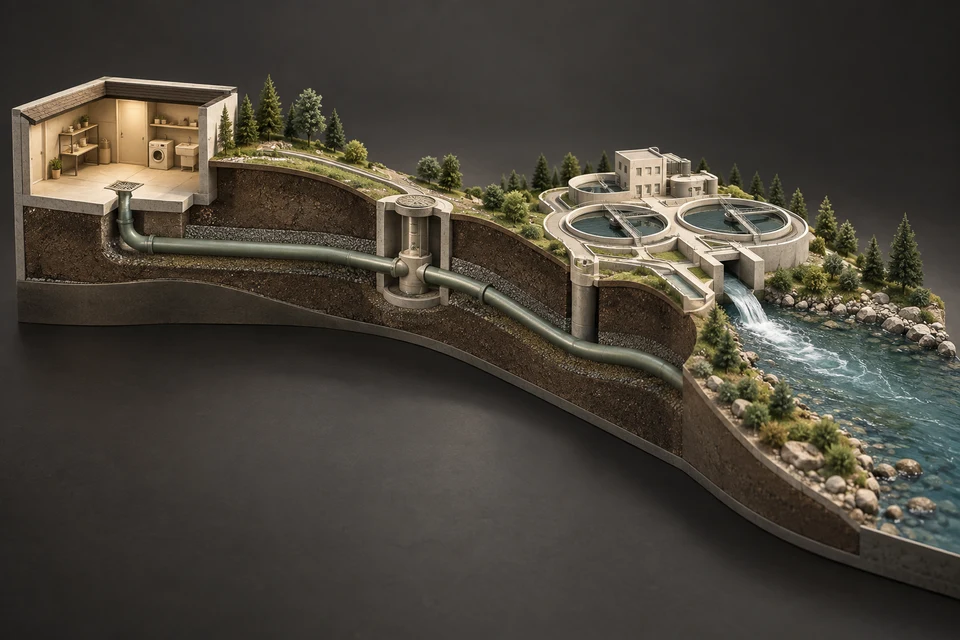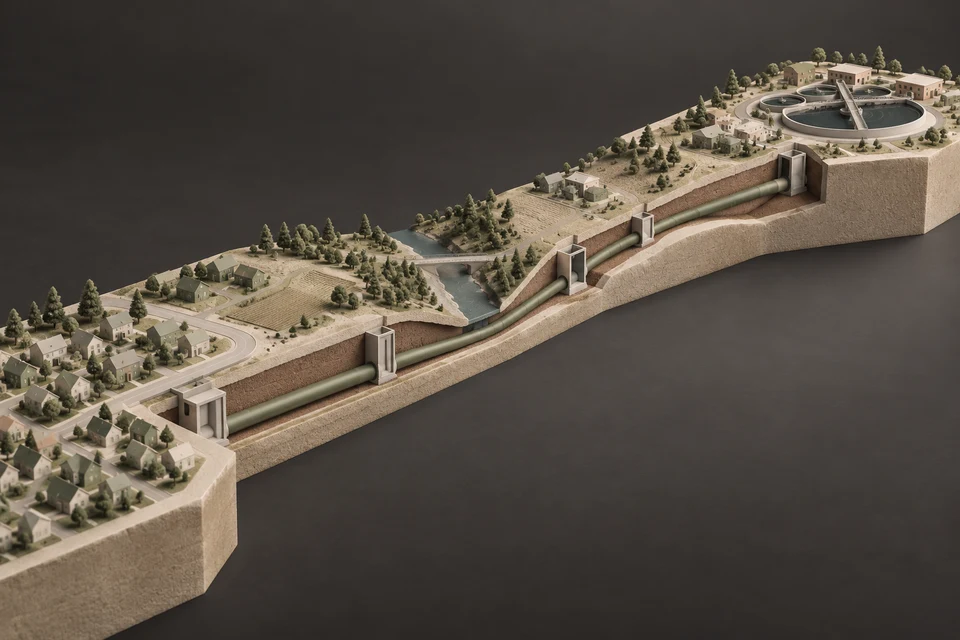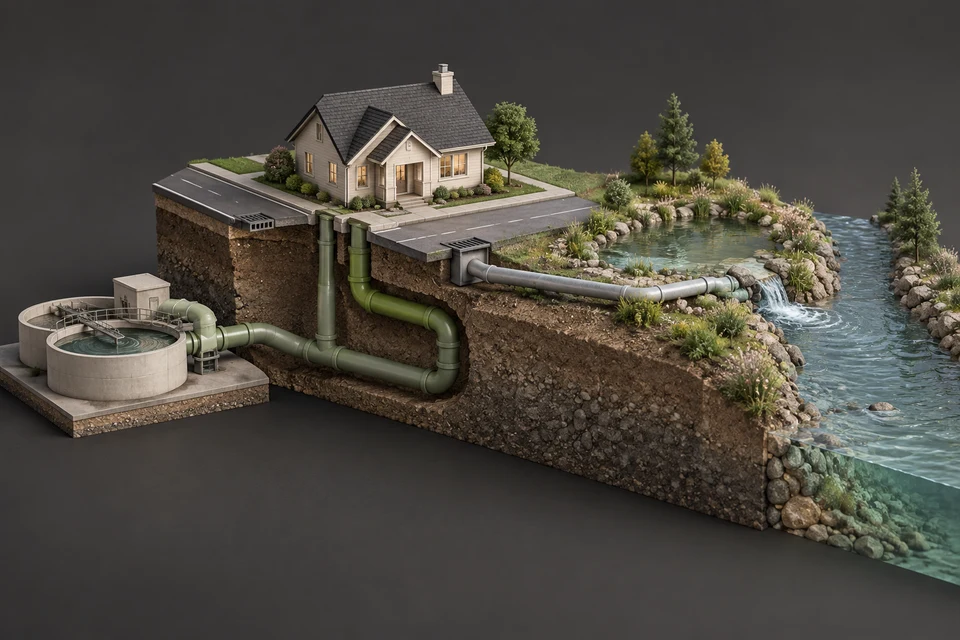
Calgary has two separate underground systems. The sanitary sewer carries wastewater from toilets, sinks and floor drains to three treatment plants. The storm sewer collects rain and snowmelt through more than 60,000 storm drains and, according to the City, carries it to rivers and streams without treatment. Heavy rain can still overload sanitary pipes through leaks and wrong connections, which is why storms and basement backups go together.
- Sanitary flow is treated at Bonnybrook, Fish Creek or Pine Creek; storm drain water goes to rivers and creeks untreated.
- The City counts more than 60,000 storm drains, more than 200 wet ponds, more than 100 dry ponds and more than 800 outfalls.
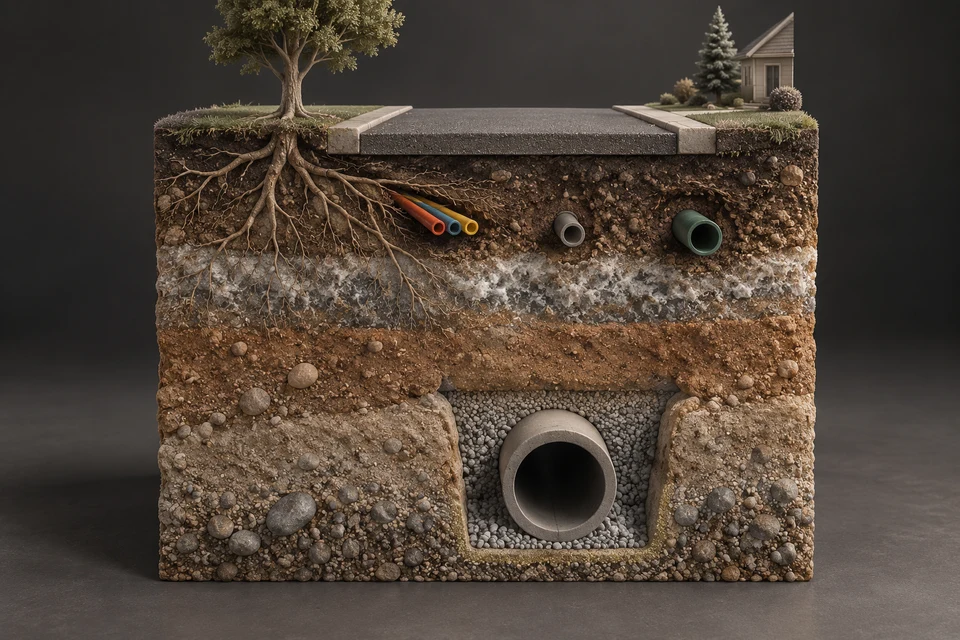
- The City's design guidelines call for at least 2.5 m of cover over sanitary sewers in the public right-of-way and at least 1.2 m over storm sewers.
- Anything other than rain entering a storm drain goes straight to a river, which is why the Stormwater Bylaw lists prohibited materials.
- Rain reaches sanitary pipes through cracked service lines and improper connections; City flow data show sanitary volumes near double on some wet summer days.
01 /What is the difference between a sanitary sewer and a storm sewer?
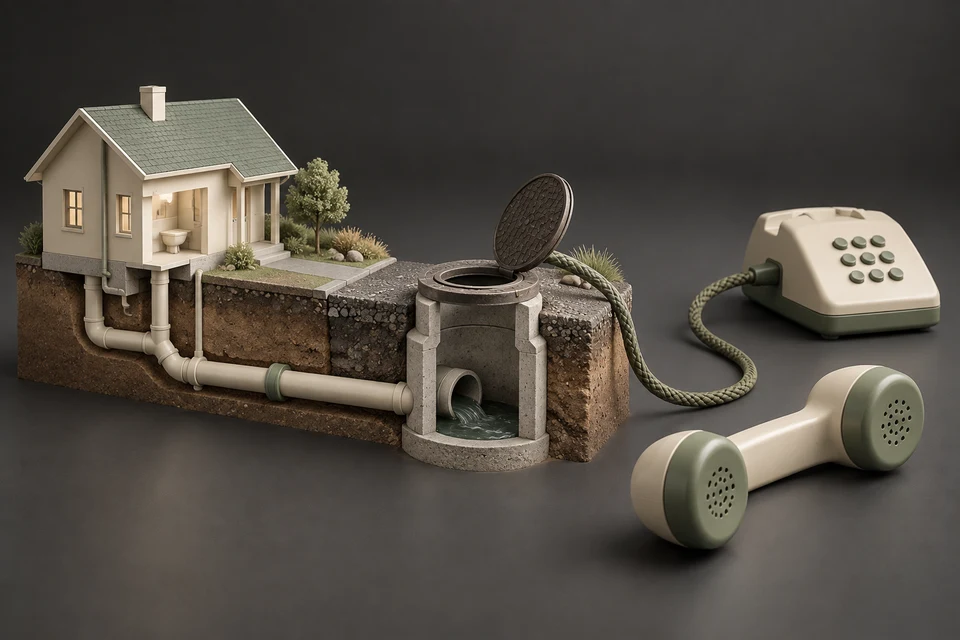
The difference is what they carry and where it goes. A sanitary sewer carries wastewater, the used water from inside buildings, to treatment. A storm sewer carries runoff, the rain and meltwater that falls on roofs, yards and roads, to the nearest river, creek or pond. Calgary builds and runs them as two separate networks.
The depth difference is telling. The City's 2018 Design Guidelines for Development Site Servicing Plans set the deeper minimum for sanitary pipe. The guidelines do not spell out why, but two practical reasons stand out: sanitary pipe has to drain basements by gravity, so it must sit below them, and it carries flow all winter, so it needs protection from frost. Storm pipes mostly carry warm-season runoff. More on why in how deep are sewer lines in Calgary.
02 /Where does Calgary's stormwater go?
Stormwater goes to rivers and creeks, sometimes by way of a pond. The City's stormwater pages describe storm drains, also known as catch basins, as the main way water drains from sidewalks and roadways into underground pipes, and state that this water travels to Calgary's rivers and streams without treatment. Along the way it picks up garbage, chemicals, pet waste, salt, fertilizer and dirt.
| Component | City's count | What it does |
|---|---|---|
| Storm drains (catch basins) | More than 60,000 | Collect runoff from streets, sidewalks and lanes |
| Wet ponds | More than 200 | Hold water all the time and slow it so sediments and some pollutants settle |
| Dry ponds | More than 100 | Stay dry most of the time, often as playing fields, and fill during heavy rain; can take up to 24 hours to drain |
| Outfalls | More than 800 | Where storm pipes discharge to rivers and creeks |
The City also designs streets to hold water briefly. Its storm drains page explains that water may pool for up to two hours after rain stops, by design, while the pipes catch up. It asks residents to contact 311 immediately if water is entering buildings or vehicles or creates a safety concern, and to include photos with reports so crews can prioritize.
03 /What is not allowed in a storm drain?
Nothing but rain and snowmelt belongs in a storm drain, because nothing downstream will clean it. The City's bylaw pages state that it is an offence to allow any prohibited material into the stormwater system, and list examples.
- Soil, construction debris and cement
- Cooking oils and grease
- Gasoline, motor oil and antifreeze
- Paint, pesticides and other hazardous substances
- Soaps and detergents, including car-washing water; one City bylaw page says to use a car wash, another allows rinsing on the street with water alone, and both rule out soap
- Grass clippings and yard waste, and animal waste
Downspouts are regulated too. The City's bylaw summary says downspouts and eavestroughs must not end within 2 metres of a surface drainage facility (unless in a side yard) or of a street, which includes alleys and lanes. The City's storm drains page separately recommends directing downspouts at least two metres away from foundations. The bylaws involved, and how to report a violation, are covered in Calgary sewer bylaws and 311, and the downspout, swale and drainage permit rules in detail in Calgary's drainage bylaw and permits. What storm runoff and sewage releases mean for the river is examined in sewage leaks and the Bow River.
04 /Why do storms cause sanitary backups if the systems are separate?
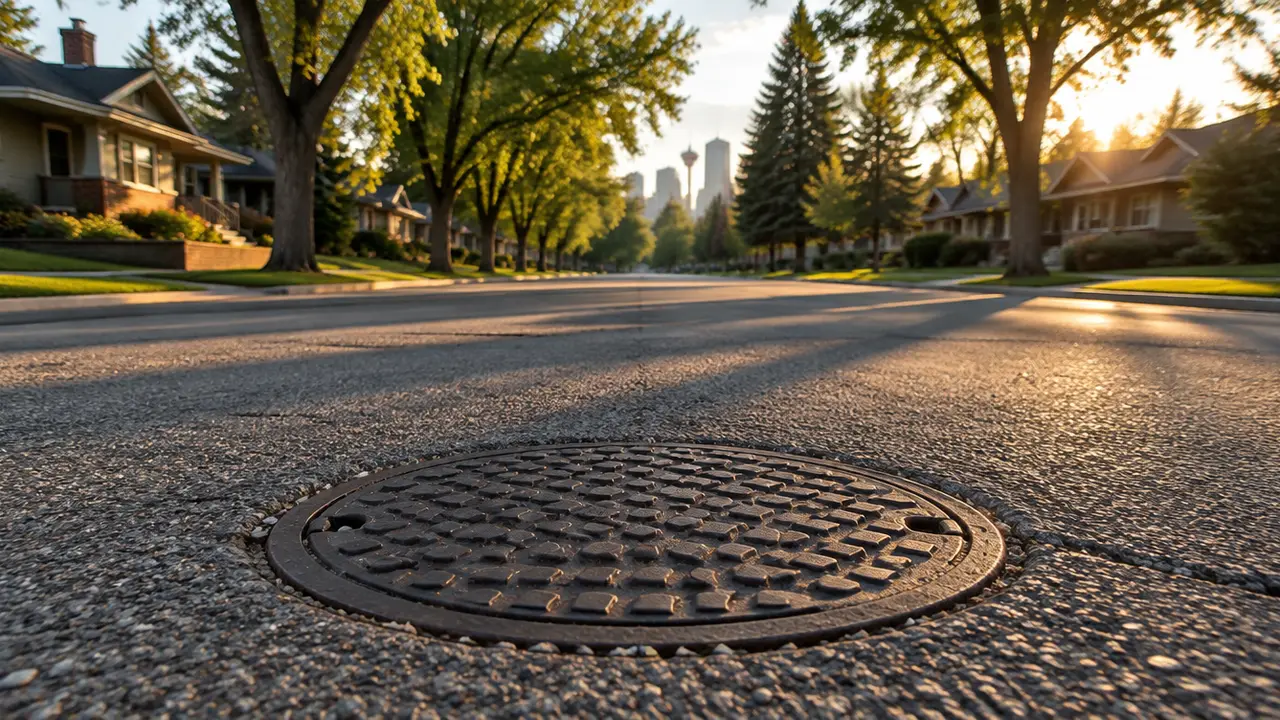
Because separate on paper is not watertight in the ground. Rain and groundwater get into sanitary pipes through two routes that engineers call inflow and infiltration. Inflow is water that enters through a direct opening: a loose manhole lid in a flooded street, a yard drain or downspout wrongly tied into a sanitary line, or a sump pump discharging into a floor drain. Infiltration is groundwater that seeps in through cracks, open joints and root holes in old pipe, including private service lines.
The City's own flow records show the effect. In its effluent data, the Bonnybrook plant's highest-flow days in 2025 were in late June and July, reaching about 720,000 cubic metres on 22 July, against a January–February average of about 371,000. Sewage production does not double in summer; the extra volume is water that found its way into the sanitary system.
When a main surcharges, water rises in every connected service line and finds the lowest opening, usually a basement floor drain. That is why the City's home maintenance guidance notes that Alberta's plumbing code requires any below-grade fixture to be protected from sewer backup from the street, and why its climate-ready guidance says a plumbing permit is required to install a backflow prevention device, graded down toward the municipal sewer at not less than 2%. The City adds that a full-port backwater valve needs servicing every year.
05 /Is there a map of Calgary's storm and sanitary sewers?
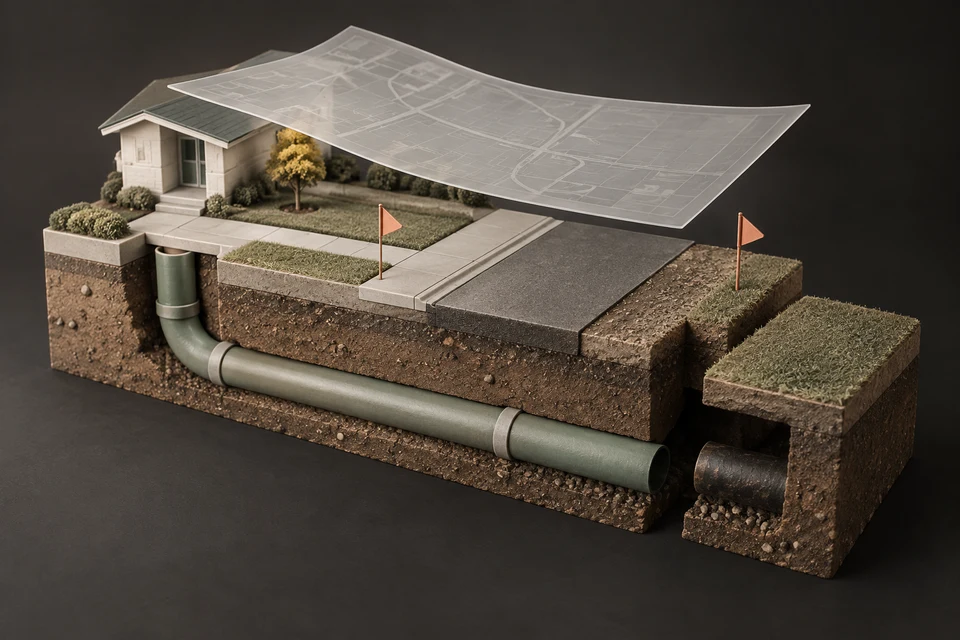
Partly. The City publishes its residential sanitary service lines as free open data, and it sells detailed Sanitary Utility Section Maps, showing mains, manholes and test manholes, through its City Online store under a licence intended for developers, engineers, builders and locators. There is no free, public, address-level map of every storm and sanitary main in open data. What is available, what it costs to access and how to read it are explained in Calgary sewer maps.
For homeowners, the more useful map is often the one a locator paints on the lawn. Alberta's one-call service, Utility Safety Partners, marks utility-owned lines for free, but it does not mark customer-owned water and sewer service lines; those need a private locator.
06 /Who handles storm problems and who handles sanitary problems?
It depends on which system and which side of the property line. The table below sorts common situations by the public guidance the City publishes.
| Situation | System | Where to start |
|---|---|---|
| Water ponding in the street or a grate plugged with debris | Storm (City) | Report to 311 and attach photos |
| Wastewater rising through the basement floor drain | Sanitary | Start with 311, whose crew can snake the cleanout to see which side of the property line is blocked |
| Clear water entering through foundation walls or the slab | Groundwater and lot drainage (owner) | 311 can assess, but the City treats basement flooding as the owner's problem and does not pump basements out |
| A sump pump that cycles all day | Weeping tile and sump (owner) | Call a plumber; keep the discharge off neighbouring lots, lanes and sidewalks and out of foundation drains, as the City asks |
| Someone pouring or spilling material into a storm grate | Storm (City) | Report it to 311 as a Stormwater Bylaw matter |
Weather alerts come from Environment and Climate Change Canada, not the City. When a severe thunderstorm warning is issued, the practical steps are the same each time: keep floor drains clear, check that the backwater valve has had its annual service and its access cover is secure, point downspouts away from the house and keep the sump discharge running where it should.
If you need work on your own drainage or sanitary line, you can request quotes from contractors who handle private sewer and drainage work.
FAQQuestions people ask
Does Calgary treat stormwater?
Not at the treatment plants. The City says storm drain water travels to rivers and streams without water treatment, although wet ponds slow it down so some sediment and pollutants settle.
Is my basement floor drain storm or sanitary?
In most Calgary homes the basement floor drain connects to the sanitary system. That is why sewage can back up through it when a main surcharges, and why nothing hazardous should go down it.
Why does my basement back up when it rains if Calgary's sewers are separate?
Rain and groundwater leak into sanitary pipes through cracks, open joints, loose lids and improper connections. When the main fills, wastewater rises to the lowest opening, often a floor drain. A backwater valve helps protect below-grade fixtures.
Can I drain my pool or hot tub into the storm drain?
The City's bylaw pages point to the Wastewater Bylaw for pool and hot tub drainage requirements. Check calgary.ca or call 311 before draining, because rules on chemicals and where the water may go apply.
Where do I report a blocked storm drain in Calgary?
Call 311 or use the 311 app or online form. The City says photos help crews prioritize, and to report immediately if water is entering buildings or vehicles.
NETWORKGo deeper across the HAUSE Sewer network
Commercial and municipal sewer jetting: combination trucks, interceptors and schedules
Commercial sewer jetting explained: jet-vac combination trucks, high-flow mains cleaning, restaurant grease lines, interceptors and confined space rules.
SewerInspector.caSewer scope inspections in Edmonton: what to expect and who to call
Sewer scope and sewer line inspection in Edmonton: what mature and newer neighbourhoods show on camera, cold and clay soils, elms, EPCOR and 311 checks.
SewerCleaners.caWhat causes sewer backup, and how to tell which cause is yours
What causes sewer backup: roots, grease, wipes, sags, broken pipe, frozen lines and rain-overloaded city sewers, plus how to tell which one caused yours.