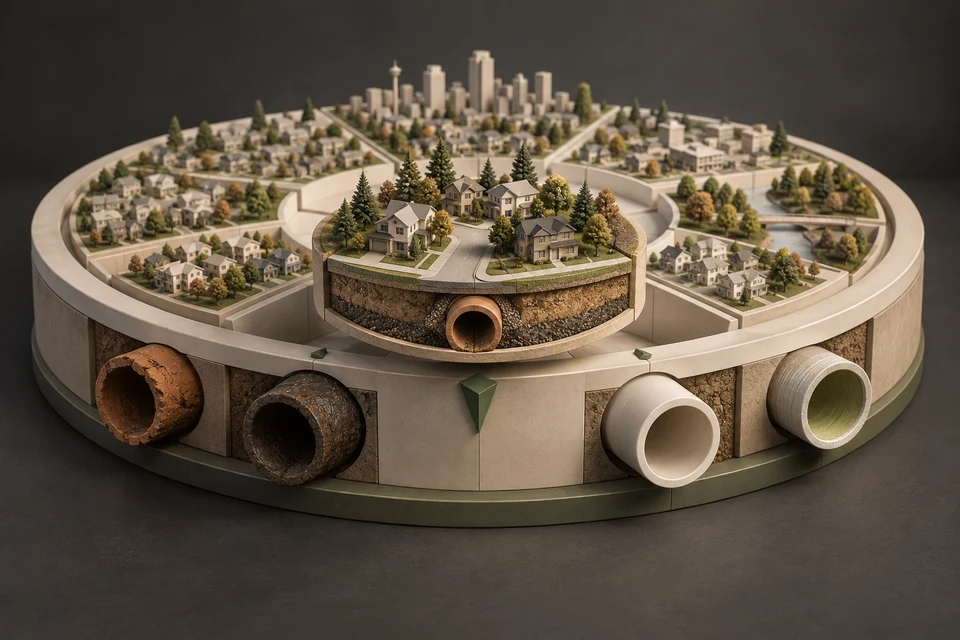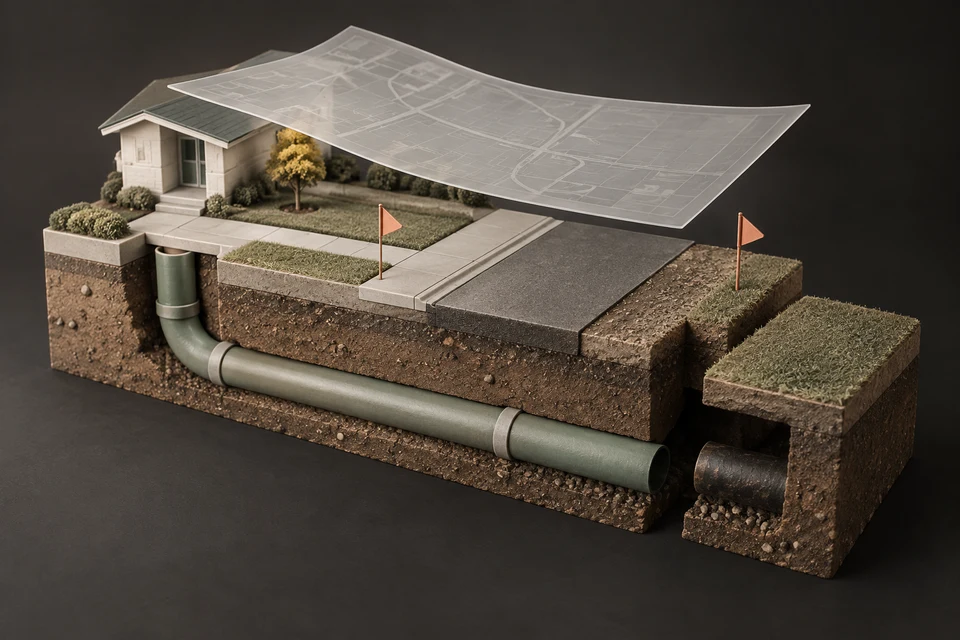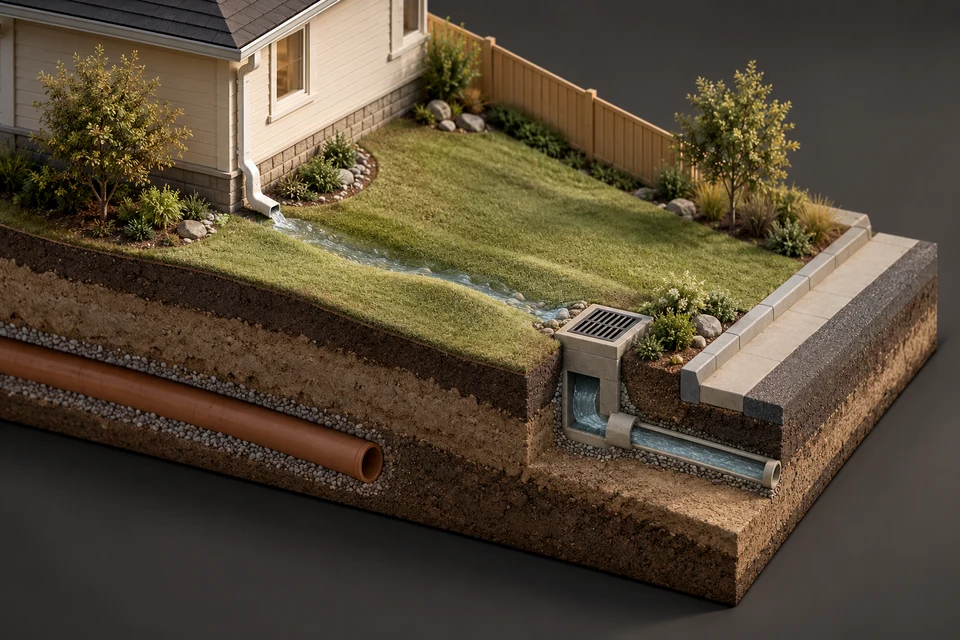
Calgary's drainage rules sit mainly in Stormwater Bylaw 37M2005, which older City documents call the Drainage Bylaw, and Lot Grading Bylaw 32M2004. The Stormwater Bylaw keeps prohibited material out of storm drains, sets downspout and swale rules and requires a drainage permit or notification before most releases to the storm system. First-offence fines run from $75 to $3,000, as checked September 2026.
- Stormwater Bylaw 37M2005 is the bylaw people search for as Calgary's drainage bylaw; the City's 2018 bypass pumping guidelines still list it as Drainage Bylaw 37M2005.
- Downspouts must end at least 2 metres from sidewalks, roads, lanes and surface drainage facilities, and must not connect to weeping tile.
- Swales and other surface drainage facilities on private lots must be kept clear, and nothing but a fence with 15 cm of clearance may be built over them.
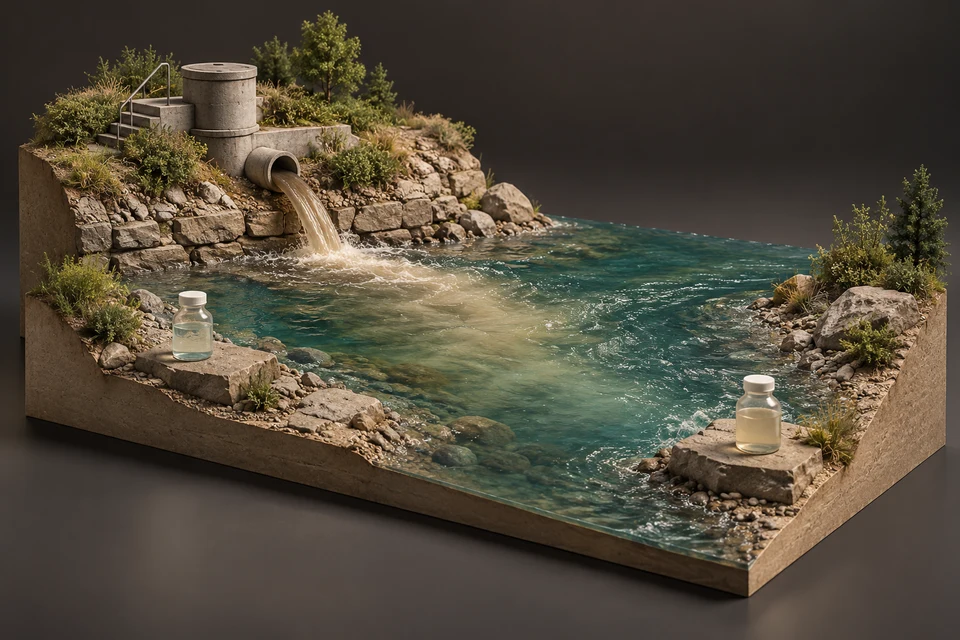
- Releasing water to a street, swale or storm drain generally needs a City drainage permit or notification, and water above 100 NTU turbidity may not be discharged.
- The Lot Grading Bylaw applies at construction; the City says it does not mediate neighbour-to-neighbour drainage disputes afterward.
01 /Which bylaw is Calgary's drainage bylaw?
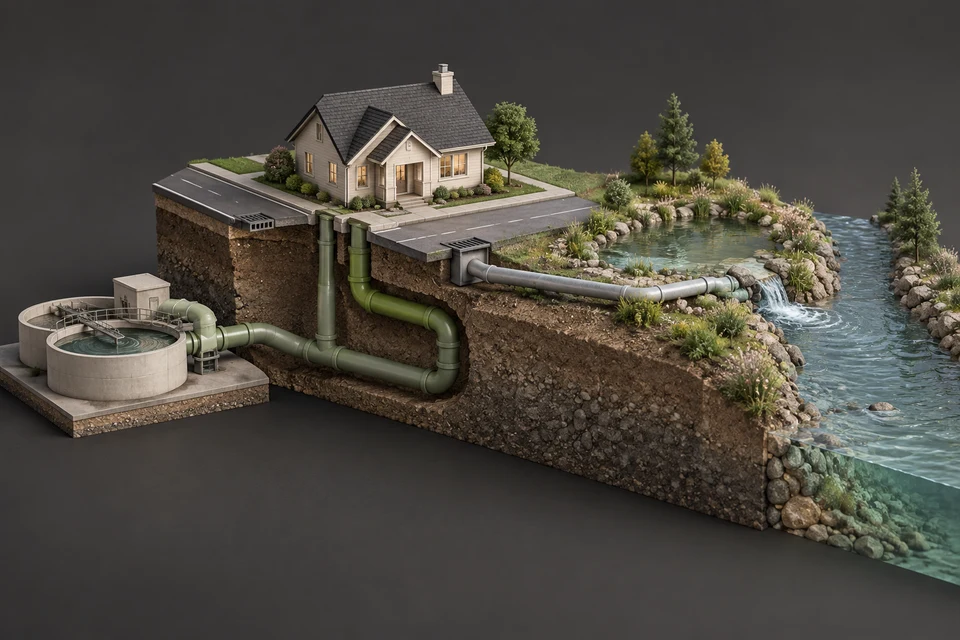
It is Bylaw 37M2005, now titled the Stormwater Bylaw on the City's bylaw pages. Many City documents written before the renaming, including the 2018 Sewer Bypass Pumping Guidelines, list it as Drainage Bylaw 37M2005, which is why both names turn up in searches. It governs the storm drainage system: street drains, pipes, ponds, swales and the outfalls that discharge to rivers.
| Bylaw | Number | What it covers | Applies mainly to |
|---|---|---|---|
| Stormwater Bylaw (formerly Drainage Bylaw) | 37M2005 | What may enter the storm system, downspouts, surface drainage facilities, drainage permits | Everyone: residents, builders, businesses |
| Lot Grading Bylaw | 32M2004 | Grading new lots so surface water drains away from buildings | Builders and developers at construction |
| Wastewater Bylaw | 14M2012 | What may enter the sanitary sewer | Mainly businesses and industry |
| Community Standards Bylaw | Not quoted here | General property standards | Residents |
The City describes the Stormwater Bylaw as working together with the Lot Grading and Community Standards bylaws. The sanitary side is a different system with its own rules, set out in Calgary sewer bylaws and 311. The basic distinction, and why it matters for flooding, is in sanitary vs storm sewers in Calgary.
02 /What does the Stormwater Bylaw require of Calgary homeowners?
Four practical duties cover most houses: aim your downspouts correctly, keep drainage features clear, keep prohibited material out of the storm system, and send pool and hot tub water to the sanitary drain. The City's bylaw summary pages describe each one.
- Downspouts: they must end at least two metres (6.6 feet) from any sidewalk, road, pathway, alley, lane or surface drainage facility. The City explains that this prevents ice forming on walks and lanes in winter, and suggests pointing downspouts toward the front or back of the lot so runoff reaches the street or lane.
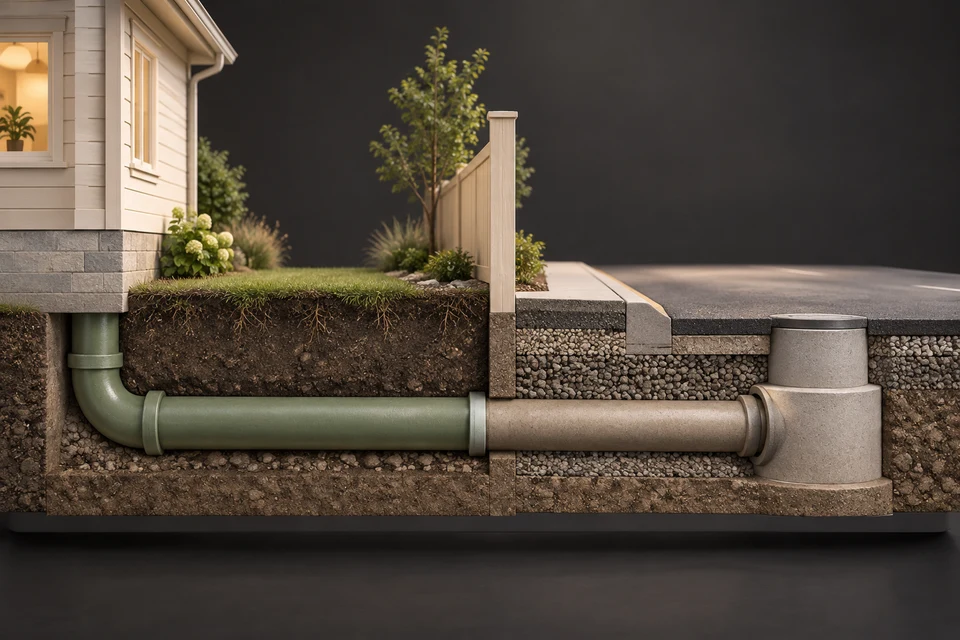
- No roof water in the weeping tile: the penalty guide lists connecting downspouts or similar piping directly to a foundation drain or weeping tile as a separate offence.
- Surface drainage facilities: swales and catch basins on private property, which the City also calls an Overland Drainage Right-of-Way, must be kept clear of soil, silt, yard waste and anything else that blocks flow. No building or structure may sit on or over them; a fence may cross one only with at least 15 cm (6 inches) of clearance underneath.
- Prohibited material: soil, animal waste, cooking oil and grease, fuels, motor and transmission fluids, solvents, paint, cement, sawdust, yard waste, pesticides, soaps, detergents, odorous materials and hot tub water are all on the City's list.
- Pools and hot tubs: the City says to drain them into the wastewater drain in the basement so the water does not reach a storm sewer.
Car washing is the one topic where the City's own pages disagree. Its stormwater bylaw page says that under Bylaw 37M2005 you may wash a car on the street using only water, with no soap or other product, while its older storm drain page says vehicles must be washed at a car wash. Until the pages are reconciled, the safe reading is that soapy wash water must never reach a storm drain; ask 311 if you need a definite answer.
03 /What are the fines under Calgary's Stormwater Bylaw?
The City's bylaw summary says first-offence fines range from $75 to $3,000. Its specified penalty guide for Bylaw 37M2005 lists amounts by section. A selection is below, quoted as published and checked September 2026; the guide itself notes it is for information and is not legal advice.
| Section | Offence (City's wording, shortened) | Specified penalty |
|---|---|---|
| 4(1) | Release a prohibited material into the storm drainage system | $3,000 |
| 4(2) | Release impounded water | $1,500 |
| 4(3)(b) | Release exceeding 3,000 L | $500 |
| 4(3)(e) | Release without permit | $1,500 |
| 5(1)(b) | Fail to notify the City | $500 |
| 6(1)(b) | Downspout or piping ends within 2 m of a surface drainage facility not in a side yard | $300 |
| 6(1)(c) | Downspout or piping ends within 2 m of a street | $300 |
| 6(2) | Connect downspouts directly to foundation drain or weeping tile | $500 |
| 7 | Pump or direct impounded water from a parcel without consent | $1,500 |
| 11(1)(a) | Allow a structure other than a fence on or over a surface drainage facility | $1,500 |
04 /When do you need a drainage permit in Calgary?
Whenever you plan to release water directly or indirectly into the stormwater system, including roadways and swales, unless the activity is on the City's exempt list. The City's stormwater drainage and permits page asks for a Site Drainage Application, submitted online, and may ask for lab results on the water.
Quality limits apply even with approval. The City states that water with a turbidity reading above 100 NTU (nephelometric turbidity units) may not be discharged to the storm system, and that some substances must never go in, permit or not. The permit, once issued, can carry its own conditions on how and when the pumping is checked.
For a homeowner, the common trigger is a renovation or rebuild. An excavation for a basement, an underpinning job or a sewer line replacement trench fills with groundwater and rain, and the crew needs somewhere to pump it. That discharge belongs to the contractor's drainage plan, and your quote should say who applies for the permit.
05 /What does the Lot Grading Bylaw do, and who fixes drainage between neighbours?
The Lot Grading Bylaw, 32M2004, makes sure new buildings start with a lot that sheds water. The City's lot grading page says it applies when single and semi-detached homes, duplexes, multi-family, commercial and industrial buildings are constructed, and that builders must submit an As Constructed Grade Certificate within 12 months of occupancy or permit issuance. The goal is positive drainage: surface water directed toward the street, the lane or a swale, away from buildings.
After construction, responsibility shifts. The City states that it has a limited role in lot grading once a lot is built, does not mediate neighbour-to-neighbour disputes, and becomes involved mainly where a bylaw is broken, such as a blocked swale or a downspout aimed at a lane. It points owners to its homeowner guidelines for resolving a lot drainage issue and to community mediation services. Builders who do not comply with the Lot Grading Bylaw face fines of up to $10,000, according to the same page.
| Problem | Usually whose | First step |
|---|---|---|
| Water pooling against your foundation from your own roof | Owner | Extend downspouts and regrade soil to fall away from the wall |
| Neighbour's downspout aimed at your side yard | The neighbours, privately | Talk first; the City does not mediate grading disputes |
| Shared swale blocked by a shed, garden bed or fill | Bylaw matter | Report to 311 with photos |
| Catch basin in the lane or street blocked or flooding | City | Report to 311 |
| Water in the basement through the floor drain | Depends on the cause | See sanitary vs storm sewers and call 311 if sewage is involved |
06 /How do drainage rules connect to your sanitary sewer?
They keep rain out of it. Water that reaches the sanitary system through a downspout, a sump pump discharge into a floor drain or a cracked service line has to be pumped and treated as sewage, and in storms it takes up pipe capacity that basements downstream depend on. The City's effluent data show treatment plant flows far above normal on wet summer days, which is the sanitary system carrying water it was never meant to carry.
That makes the Stormwater Bylaw's weeping tile rule a sanitary-sewer rule as well. Roof water sent into a foundation drain raises the groundwater around the house, loads the sump or the service line, and in older homes where weeping tile was tied to the sewer it can go straight into the sanitary main. Older communities in the City's service line records, especially those built before the 1980s, are where such connections are more likely to turn up; see the Community Sewer Atlas for the era of your area.
A licensed plumber, with a camera, can show whether your weeping tile, downspouts or sump are tied into the sanitary line. If you want someone to assess drainage and sewer connections together, you can request quotes and ask each contractor to address both in writing.
FAQQuestions people ask
What is the Calgary drainage bylaw number?
Bylaw 37M2005. The City now calls it the Stormwater Bylaw, but older City documents, including its 2018 sewer bypass pumping guidelines, refer to it as Drainage Bylaw 37M2005.
How far must downspouts be from a sidewalk or lane in Calgary?
At least two metres (6.6 feet) from any sidewalk, road, pathway, alley, lane or surface drainage facility, according to the City's summary of the Stormwater Bylaw. The penalty guide lists $300 for each type of breach.
Do I need a permit to drain my pool or hot tub in Calgary?
The City says to drain pools and hot tubs into the basement wastewater drain, not the storm system. Its permit page exempts pools and fountains under 3,000 litres without treatment chemicals from storm drainage approval; larger or treated volumes need a permit or notification.
Can I build a shed or fence over a swale in Calgary?
Not a shed. The City says no building or structure may be built on or over a surface drainage facility. A fence may cross one only with at least 15 cm (6 inches) of clearance above it.
Will the City of Calgary fix a drainage dispute with my neighbour?
Generally no. The City's lot grading page says it does not mediate neighbour-to-neighbour disputes and has a limited role after construction, unless a bylaw is being broken. It points owners to its homeowner guidelines and mediation services.
What are the fines for dumping into a storm drain in Calgary?
The City's penalty guide lists a $3,000 specified penalty for releasing a prohibited material into the storm drainage system, as checked September 2026. Report dumping to 311.
How do I get a drainage permit in Calgary?
Submit a Site Drainage Application online through the City's stormwater drainage and permits page, or ask 311. Be ready to describe the water source, volume and quality; water above 100 NTU turbidity cannot be discharged.
NETWORKGo deeper across the HAUSE Sewer network
How to prevent sewer backup in your basement: a layered plan
How to prevent sewer backup in a basement: keep your lateral clear, maintain a backwater valve, disconnect downspouts, manage weeping tile, plan for storms.
SewerQuotes.comSewer line replacement cost by city: why local quotes differ
Sewer line replacement cost by city: why Calgary, Edmonton, Regina and other Canadian markets quote differently, GST/HST by province, and local drivers.
SewerRoots.caRoots in the main sewer line: is it your lateral or the city's sewer main?
Roots in the main sewer line: how to tell your own lateral from the city sewer main, clues that point to the public side, and who to call first.