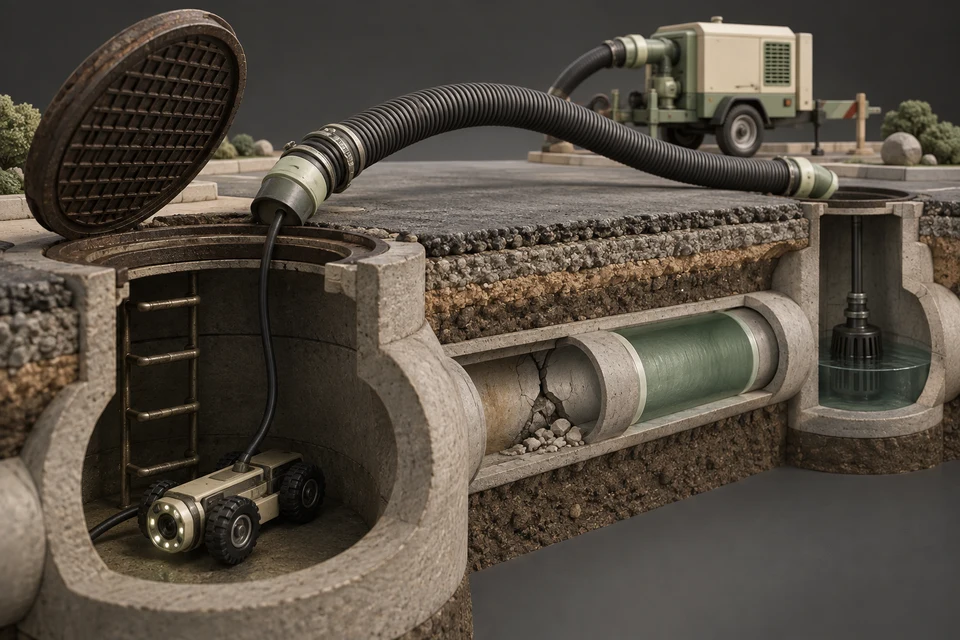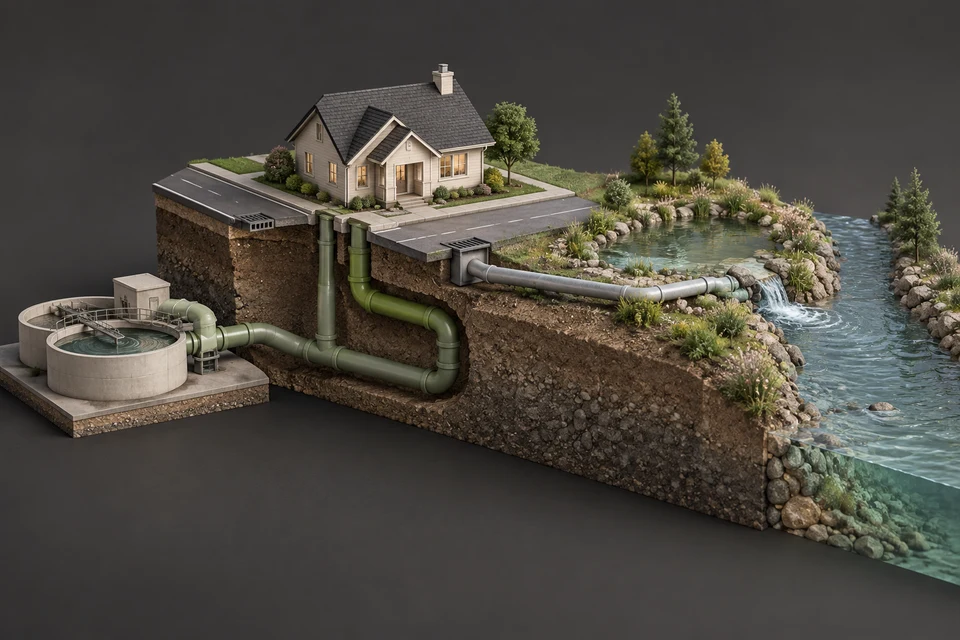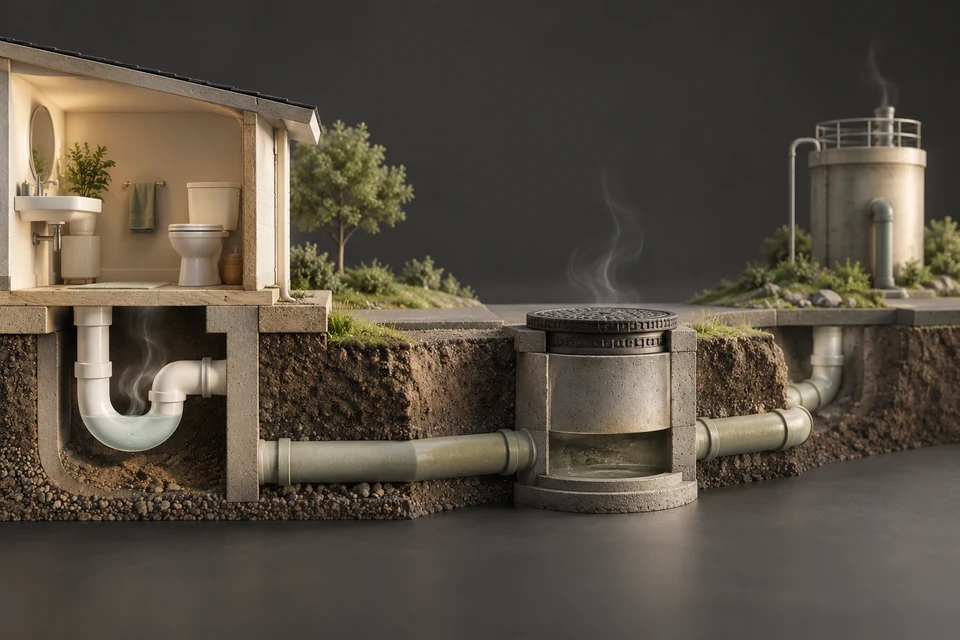
A sewer smell in Calgary has one of three sources. Inside, it is usually a dry trap, a loose cleanout cap or a vent fault, which is the owner's to fix. Outside, it can come from a manhole, catch basin or lift station, which are the City's. Across a whole area, it can drift from a treatment plant, the biosolids lagoons or the Shepard landfill. Report outdoor odours to 311.
- Test the house first: a smell that is strongest near a floor drain, basement toilet or laundry standpipe is almost always a plumbing fault, not the City sewer.
- Sewage smell from a street catch basin is worth a 311 report, because storm drains should carry only runoff and odorous material is prohibited in them.
- The City's southeast odour investigation uses more than 100 sampling stations around its Shepard operations, and it found about 39% of complaints came from sources off City sites.
- For a useful odour report the City asks for the exact time, the location and how long the smell lasted.
- A rotten-egg smell can also mean natural gas; if there is any doubt, leave the building and call 911 from outside.
01 /Where is the sewer smell coming from?
Location tells you most of the answer. Sewer odour comes from gases, mainly hydrogen sulphide and ammonia, that form when wastewater sits without enough oxygen. Those gases escape wherever the sealed path from drain to plant is open to the air. Work from the inside out.
| Where you notice it | Likely source | Whose to fix | First step |
|---|---|---|---|
| One room, near a floor drain or rarely used fixture | Dry trap, missing trap seal | Owner | Pour water into the drain and see if the smell fades within a day |
| Basement, near the main cleanout | Loose or cracked cleanout cap, failed seal | Owner | Check the cap is present and tight |
| Around a toilet base | Failed wax ring or loose flange | Owner | A plumber reseats the toilet |
| Whole house, worse on windy or very cold days | Blocked or frosted roof vent, siphoned traps | Owner | Listen for gurgling drains; have the vent checked |
| At a manhole in the street or lane | Gas venting from the City main | City | Report to 311 with the manhole location |
| At a storm catch basin | Sewage or odorous material where only runoff belongs | City, possibly a bylaw matter | Report to 311 |
| Near a small fenced building with pumps | A sanitary lift station | City | Report to 311 if persistent |
| Across a neighbourhood, varying with the wind | A regional source: plant, lagoons, landfill, compost or industry | Facility operator | Report to 311 with time, place and duration |
If the smell is inside and outdoors is fine, the problem is almost certainly in your plumbing, and tracing it is the owner's job, usually with a plumber. The help-desk side of Calgary sewer problems, including what to do step by step at home, is covered by CalgarySewers.com. This page concentrates on the smells that come from the public system.
02 /Why does a basement floor drain smell like sewer?
Because its water seal has dried out. Every drain has a trap, a U-shaped bend that holds a plug of water between the room and the sewer. A basement floor drain may go months without receiving water, and the seal evaporates, especially in a dry Calgary winter with the furnace running. Once the water is gone, the drain is an open pipe to the building sewer and, beyond it, the City main.
- Refill it: a litre or two of water restores the seal. Some owners add a spoonful of cooking oil to slow evaporation, or fit a trap primer or a one-way floor drain insert; ask a plumber which suits your drain.
- Leave it uncovered: the City's crew guide for sewage backups says basement floor drains and cleanouts should not be covered with carpet, flooring or a toilet, and that it is preferable for the floor drain to be open. A covered drain cannot be refilled and cannot relieve a backup.
- Check the cleanout: the main cleanout is usually near where the water service enters the house. A missing or loose cap vents the building sewer straight into the basement.
If traps are full and the smell persists, the cause may be a cracked cast iron fitting, a failed wax ring or a vent problem. Homes whose service lines date from the cast iron and clay tile decades are more likely to have ageing fittings; the Service Line Lookup shows what the City's record says about the public portion of your line, which hints at the era of the private side too.
03 /Why does the sewer smell outside on some Calgary streets?
Because the public system is not airtight, and some parts of it produce more gas than others. Manholes have vented lids, catch basins open to the air, and wastewater that moves slowly or sits in a wet well turns septic and releases hydrogen sulphide. Smells tend to be strongest at a few predictable places.
| Location | Why it smells | What helps |
|---|---|---|
| Manholes on flat mains | Slow flow lets solids settle and turn septic | Cleaning of the main by City crews |
| Where a pumped line discharges into a gravity main | Wastewater held in a pressure pipe arrives low in oxygen and releases gas on turbulence | Odour treatment or ventilation at the discharge point |
| Lift stations | Wastewater collects in a wet well before pumping | Ventilation and odour control at the station |
| Catch basins in dry weather | Sediment and organic debris rot in the sump; sewage indicates a wrong connection | Report to 311 if it smells of sewage |
| Near construction | Temporary bypass pumping or an open manhole | The contractor's bypass plan must address spills and backups |
A storm drain that smells of sewage is more than a nuisance. Storm drains discharge untreated to rivers, and the City's stormwater bylaw page names both animal waste and odorous materials among the things that must not enter the system. A persistent sewage smell at a catch basin can mean an illicit or accidental connection from a building's sanitary pipe into the storm system. Report it to 311 with the location; see Calgary's drainage bylaw for the rules involved.
04 /What is causing the odour in southeast Calgary?
Several sources, not one. The City's page on odours in southeast Calgary names New Brighton, McKenzie Towne, Copperfield and Douglasdale/Douglasglen as the affected communities, and lists City infrastructure near its Shepard operations as potential sources: the Shepard landfill, the Calgary Composting Facility, the biosolids lagoons, and the storm and sewer systems.
| Item | What the City reports |
|---|---|
| Monitoring network | More than 100 sampling stations around the Shepard operations, sampling from 1.5 m to 30 m above ground, running 24/7 |
| Method | Air sampling data combined with wind direction and 311 complaints to trace sources |
| Main finding | Multiple sources, including City-operated facilities and off-site sources west of the Shepard area |
| Off-site share | About 39% of complaints traced to off-site sources |
| New source identified | The landfill's leachate system, linked to a smell residents described as rotten grass |
| Planned for 2026 | Sealing leachate access points at the Shepard landfill and adding gas chromatography–mass spectrometry instruments |
The biosolids lagoons are part of the sewer story. According to the City's wastewater treatment guide, digested solids from the plants spend spring and summer settling at the Shepard lagoons before they are applied to farmland, so a sewage-related smell in the southeast can come from the end of the treatment process rather than from a pipe. The route solids take is described in Calgary's wastewater treatment plants.
05 /Do Calgary's wastewater treatment plants smell?
They can, and the City is spending on odour control. Treatment moves and aerates large volumes of sewage, and the early stages, where screens and grit tanks handle raw flow, are the most odorous. The City's Fish Creek upgrade pages say the existing odour control facilities there will be replaced and upgraded with biofilters, and that new biofilters will serve the new process buildings.
A biofilter pushes foul air through a moist bed of organic media where microbes consume the odorous compounds. The City states that a well-maintained biofilter can cut odours, hydrogen sulphide and ammonia by more than 80 per cent. That is a statement about the technology, not a promise about any neighbourhood, so if you live near a plant, keep reporting odour events with times so the City can compare them with its operating records.
06 /How do you report a sewer smell to the City of Calgary?
Through 311, by phone, app or online form, with enough detail to match the report against wind and plant data. The City's southeast odour page asks for three things: the exact time you noticed the odour, the location, and how long it lasted.
- Write down the time to the minute
The City's own example is a time like 1:14 p.m. Sources are traced by lining complaints up with wind direction at that moment.
- Give a precise location
A civic address or intersection, and whether you were indoors or out. If it is a manhole or catch basin, say which side of the street.
- Note how long it lasted
A two-minute whiff and a two-hour smell point to different sources.
- Describe it
Rotten egg, sewage, garbage, compost and chemical smells come from different places.
- Report every time
One report is an anecdote; a series with times is data the City can use.
FAQQuestions people ask
Why does my Calgary basement smell like sewer in winter?
Most often a floor drain trap has dried out in dry indoor air, letting sewer gas through. Pour water into the drain; if the smell fades, that was the cause. If it persists with full traps, have a plumber check the cleanout cap, fittings and vents.
Who do I call about a sewer smell from a manhole in Calgary?
Call 311 or use the 311 app. Give the manhole's location, the time and how long the smell lasted. Manholes, mains and lift stations are City infrastructure.
What is the smell in southeast Calgary?
The City's investigation found several sources, including City facilities in the Shepard area such as the landfill's leachate system, and off-site sources west of Shepard, which accounted for about 39% of complaints.
Can a sewer smell in Calgary be a health risk?
In a house, a faint smell from a dry trap is mainly a nuisance to fix. In confined spaces such as manholes, hydrogen sulphide can reach dangerous levels and dull the sense of smell, so never enter one. If you might be smelling natural gas, leave and call 911.
Should a Calgary storm drain smell like sewage?
No. Storm drains carry rain and snowmelt to rivers without treatment. A sewage smell from a catch basin can mean a wrong connection or dumping, so report it to 311.
Does the City of Calgary fix sewer smells inside my house?
No. Odours from traps, fittings, vents and the private service line are the owner's to fix with a plumber. The City handles odours from its own mains, manholes, lift stations and facilities.
NETWORKGo deeper across the HAUSE Sewer network
Should you scope the sewer before buying a house?
When a sewer scope before buying a house is worth it, which homes need one most, how to fit it inside a condition period, and what to do with the result.
SewerCleaners.caIs sewer backup dangerous? Health risks, what it smells like and what it looks like
Is sewer backup dangerous? How sewage can make you sick, what sewer backup smells and looks like, when the smell is harmful, and who should stay away.
DrainAugering.caClog Locator: find the blockage before you pick up a cable
Use the Clog Locator to find where a drain clog sits (trap, branch, stack, main or lateral) and which auger class and cable size fits the pipe.