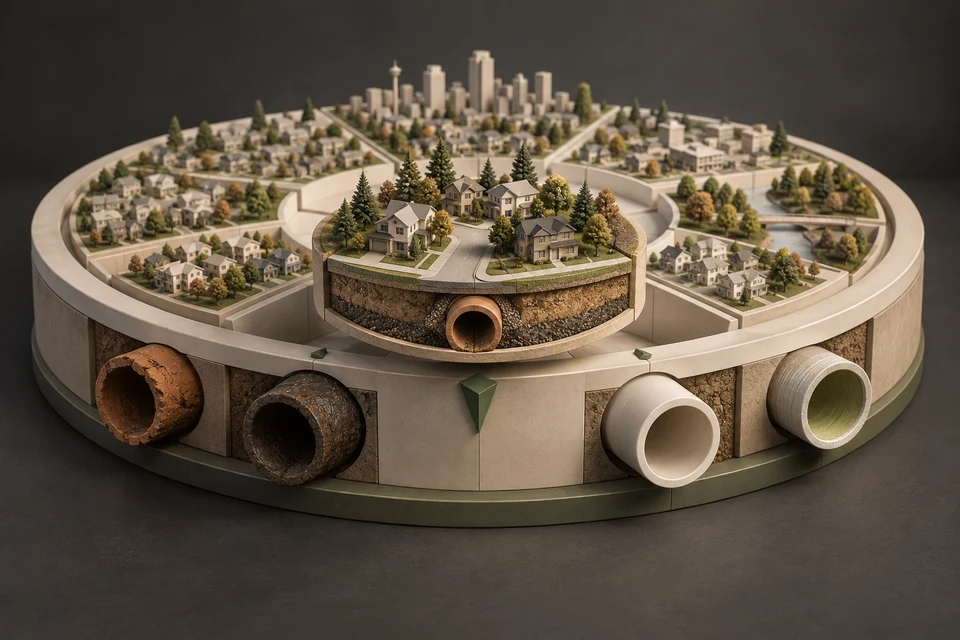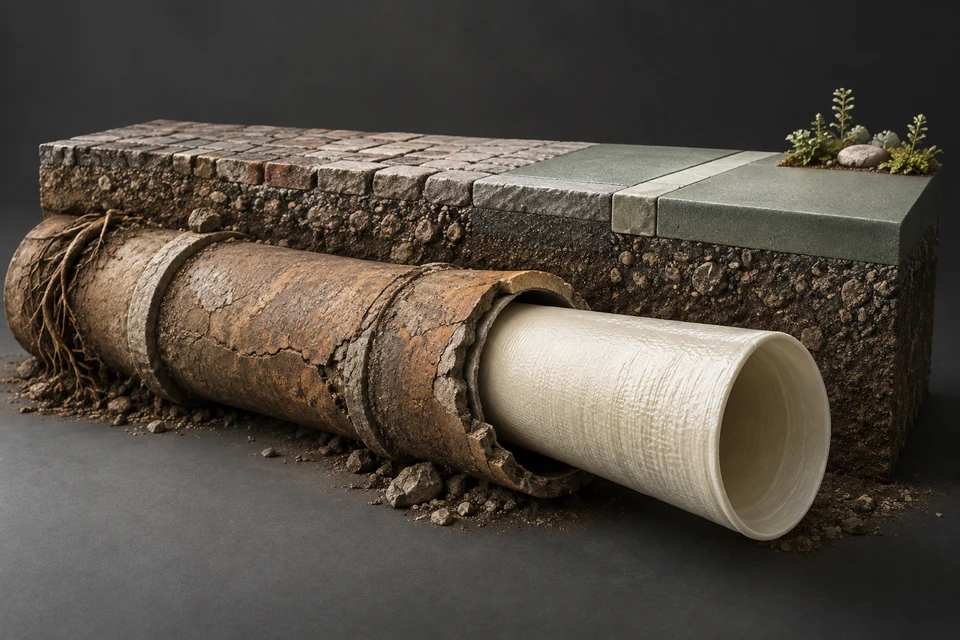
The City of Calgary's service line records run from 1901 to today and trace every era of the city's growth. Since 2017 a new pattern has appeared: cured-in-place relining of City-side segments. Of 4,113 lines coded CIPP, 3,871 are dated 2017 to 2025, and 2,310 fall in 2023 to 2025 alone. Relining is concentrated in inner-city and 1950s communities and covers only the City's segment.
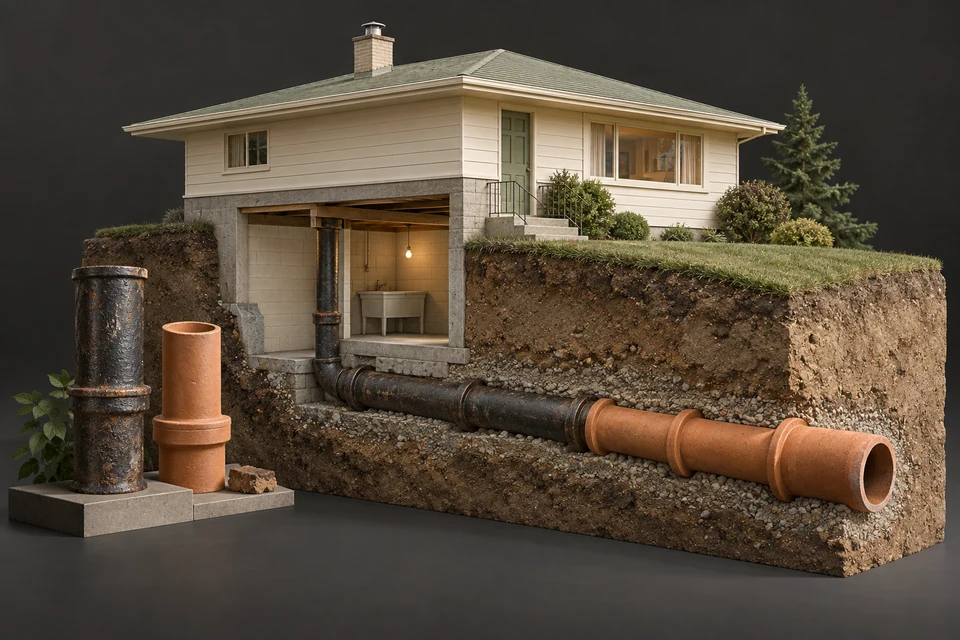
- The City-side record begins in 1901 and moves through distinct eras: OTHER codes to 1953, cast iron and TP from 1954, clay tile from 1958, PVC from 1976.
- Relining (CIPP) was rare before 2017; since then the City's record shows 3,871 relined segments, peaking at 835 in 2023.
- Relining is concentrated in older communities: Highwood (22.1%), Glendale and University Heights (19.9%), Rosemont (16.6%) and Crescent Heights (16.0%).
- The City says it is retrofitting wastewater pipes vulnerable to backups with liners and runs a Sanitary Lateral Lining Program, which it describes as a pilot.
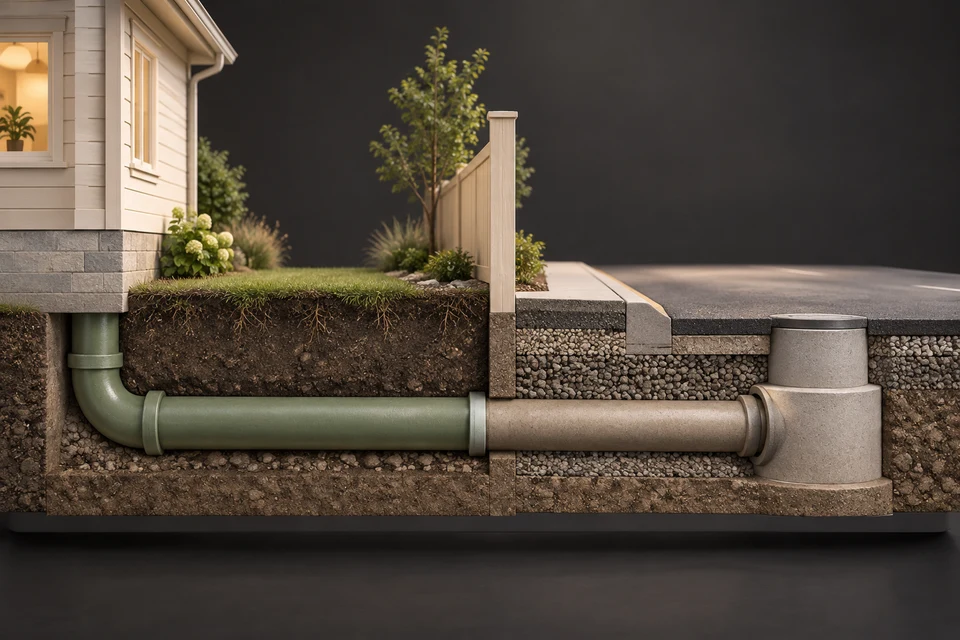
- A relined City segment does not renew the private pipe on your side of the property line.
01 /What does the City's record say about Calgary's sewer history?
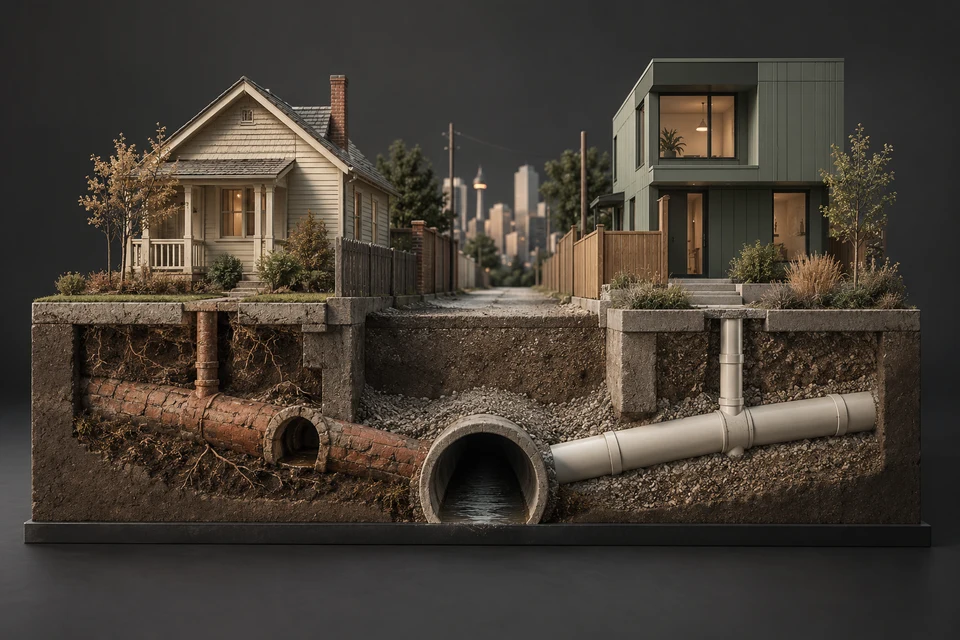
Read in date order, the City's *Public Sanitary Service Lines* data work as a timeline of how Calgary grew and what it built with. Because each row stops at the lot line, the timeline is a history of public connections; the pipe on private land may tell a different story.
| Year or era | What the record shows |
|---|---|
| 1901 | Earliest installed date on the City's service line record, in Crescent Heights |
| Pre-1915 | Brick tunnels, the first entry on the City's list of pipe types used in sanitary repairs |
| 1910s–1940s | Service lines coded OTHER almost exclusively: 866 of the 874 lines dated to the 1910s, and 4,026 of 4,081 in the 1940s |
| 1954 | Cast iron (1,108) and the unexplained TP code (325) appear; OTHER falls sharply |
| 1956 | TP peaks at 2,224 lines |
| 1958 | The TIL tile code, generally clay tile, arrives with 2,991 lines |
| 1974 | Peak tile year, 5,296 lines |
| 1976 | PVC appears in volume (422 lines), matching the City's 1976 start date for PVC in its repair list |
| 1979 | Busiest year on the record, 9,869 lines; PVC overtakes tile |
| 1981 | Tile effectively ends (165 lines) |
| 1997 and 2002 | Suburban peaks, 9,288 and 9,327 lines |
| 2008 | First notable CIPP cluster, 27 relined segments |
| 2017 | Relining ramps up to 249 segments a year |
| 2023 | Peak relining year, 835 segments |
Two cautions apply. The OTHER code is not defined in the City's metadata, and the abrupt changes in 1954 may reflect how records were kept as well as what was built. And relining or replacing a segment gives it a new date, so the record is a picture of the current network, not an untouched archive.
02 /How much has Calgary relined, and when?
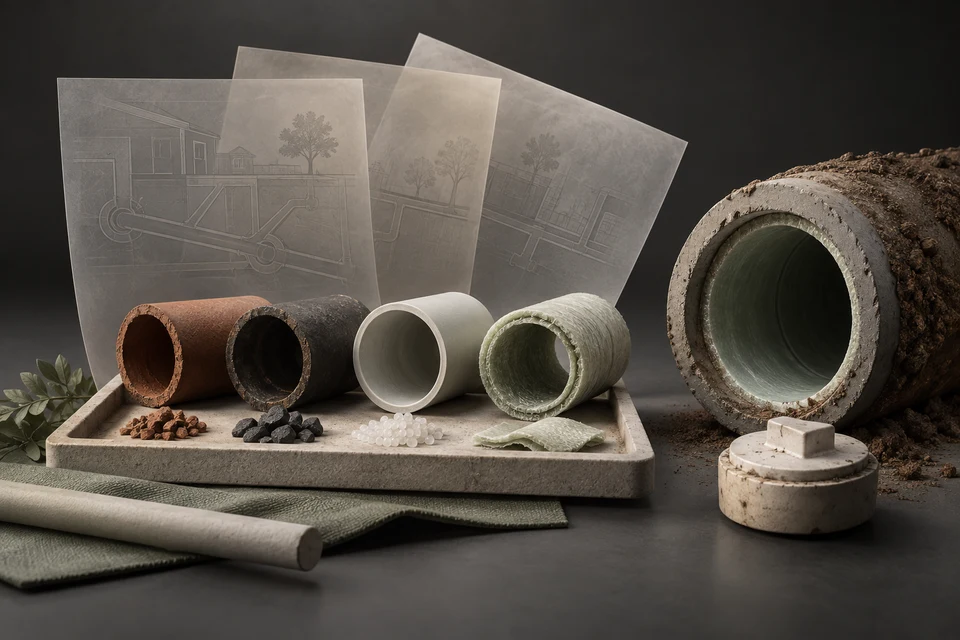
The CIPP code, for cured-in-place pipe, marks a City-side segment that has had a new pipe formed inside the old one. Its installed date is usually the relining date. The year-by-year counts show a program that barely existed before 2017 and has grown since.
| Year | Segments | Year | Segments |
|---|---|---|---|
| Before 2007 | 76 | 2017 | 249 |
| 2007–2009 | 43 | 2018 | 273 |
| 2010 | 44 | 2019 | 196 |
| 2011 | 33 | 2020 | 281 |
| 2012–2013 | 33 | 2021 | 397 |
| 2014–2016 | 4 | 2022 | 165 |
| 2023 | 835 | ||
| 2024 | 683 | ||
| 2025 | 792 |
In total, 3,871 of the 4,113 CIPP records, 94%, are dated 2017 to 2025, and 2,310, more than half, fall in 2023 to 2025. The small number dated before 2007 suggests some relined segments kept an older date. The record for 2026 was still filling when this site's snapshot was taken, since the City refreshes the dataset monthly.
03 /Where has the City relined its segments?
Mostly in older communities. By the City's structure class, 3.9% of Inner City lines and 3.8% of 1950s-class lines are coded CIPP, compared with 1.7% in the 1960s/1970s class and 0.2% in the 1980s/1990s class.
| Community | Lines | % relined | Median year | Leading older code |
|---|---|---|---|---|
| Highwood | 865 | 22.1 | 1956 | TP |
| Glendale | 972 | 19.9 | 1958 | TP |
| University Heights | 483 | 19.9 | 1965 | TIL |
| Rosemont | 482 | 16.6 | 1958 | TIL |
| Crescent Heights | 1,395 | 16.0 | 1965 | OTHER |
| Glamorgan | 1,237 | 12.5 | 1959 | TIL |
| Mount Pleasant | 2,273 | 11.2 | 2004 | OTHER |
| Collingwood | 810 | 11.0 | 1959 | TIL |
| Rosedale | 592 | 9.3 | 1950 | OTHER |
| Charleswood | 1,344 | 7.4 | 1961 | TIL |
| Huntington Hills | 3,838 | 6.8 | 1969 | TIL |
| Dover | 3,056 | 6.6 | 1972 | TIL |
By count, Huntington Hills (262 segments), Mount Pleasant (255), Crescent Heights (223), Dover (203), Glendale (193) and Highwood (191) have the most. The communities differ in age and code, from TP-heavy Highwood to tile-heavy Dover, so relining on the record is not confined to any one material code or era.
04 /What has the City said about lining?
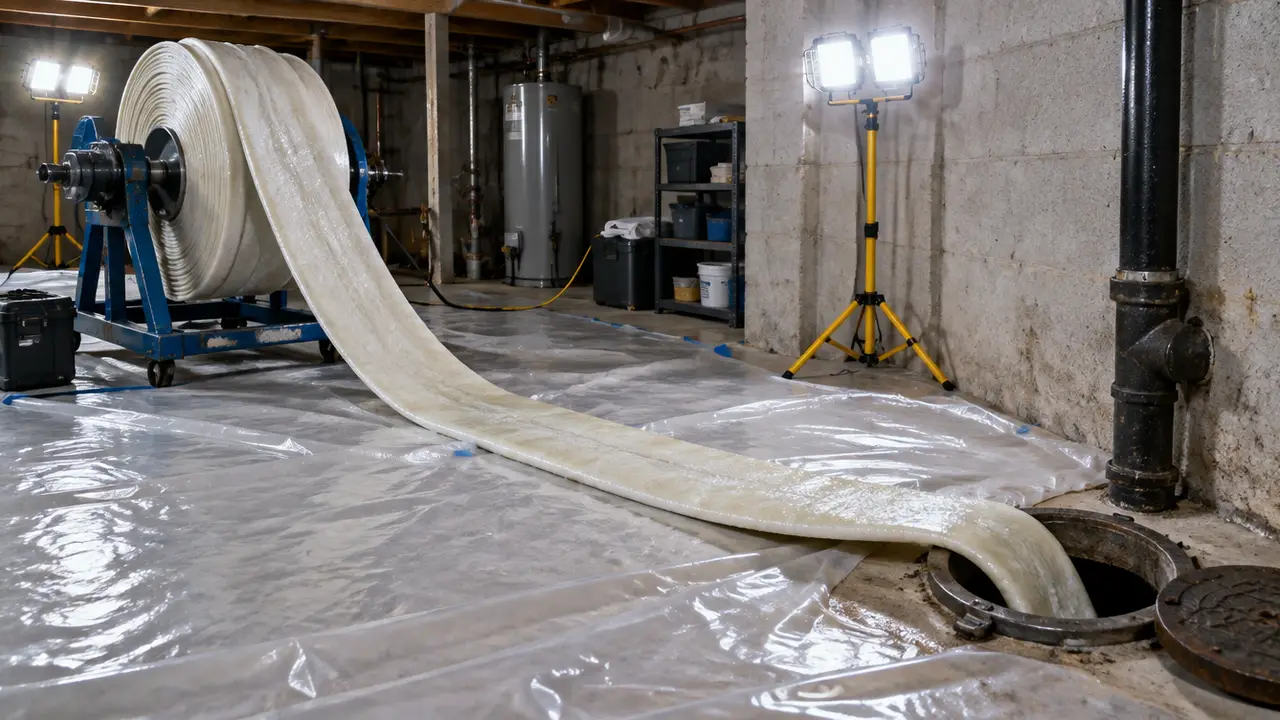
Two City pages describe the work. On Protect Your Pipes, the City says it is retrofitting existing wastewater pipes that are vulnerable to sewage backups with new liners, which helps prevent fats, oils and grease from sticking, and that some of its pipes are on a regular flushing schedule.
A second City page, for the Sanitary Lateral Lining Program, explains that liners go inside existing service pipes to lengthen their working life, and that the trenchless method spares streets and sidewalks from excavation. The City calls it a pilot, says it is administered by LiquiForce, an Ontario company, and gives its reason: aging sewer infrastructure in older communities is vulnerable to tree root intrusion, sewage backups and costly repairs. Residents are notified in person 30 minutes before they need to stop using water, and the connection is out of service for about three hours.
05 /What should you ask the City if your street is being lined?
Lining work on your street is a good moment to get answers on record; the City's programs and seasons are summarized in how the City of Calgary maintains its sewers. Crews are on site, the City knows which connections are included, and your own plans can be coordinated with theirs. Useful questions for 311 or the crew include:
- Is my connection included, and which part of it, from the main to where?
- Will the record for my address change to CIPP, and when will the open data show it?
- Is there a video of my City segment before and after lining that I can request?
- Does the work include any part of the pipe on my side of the property line?
- If I plan to replace or line my private side, how should my contractor connect to the new liner?
Write down the date, the 311 reference number and the answers. The City's published split makes the private segment the homeowner's responsibility, so anything the City does on your side should be confirmed in writing rather than assumed.
06 /What does a relined City segment mean for you?
It means the City's part of your connection has been renewed, and nothing more. The liner stops at the extent of the City's work. A clay, cast iron or OTHER-era pipe on your side keeps all its original joints and weaknesses.
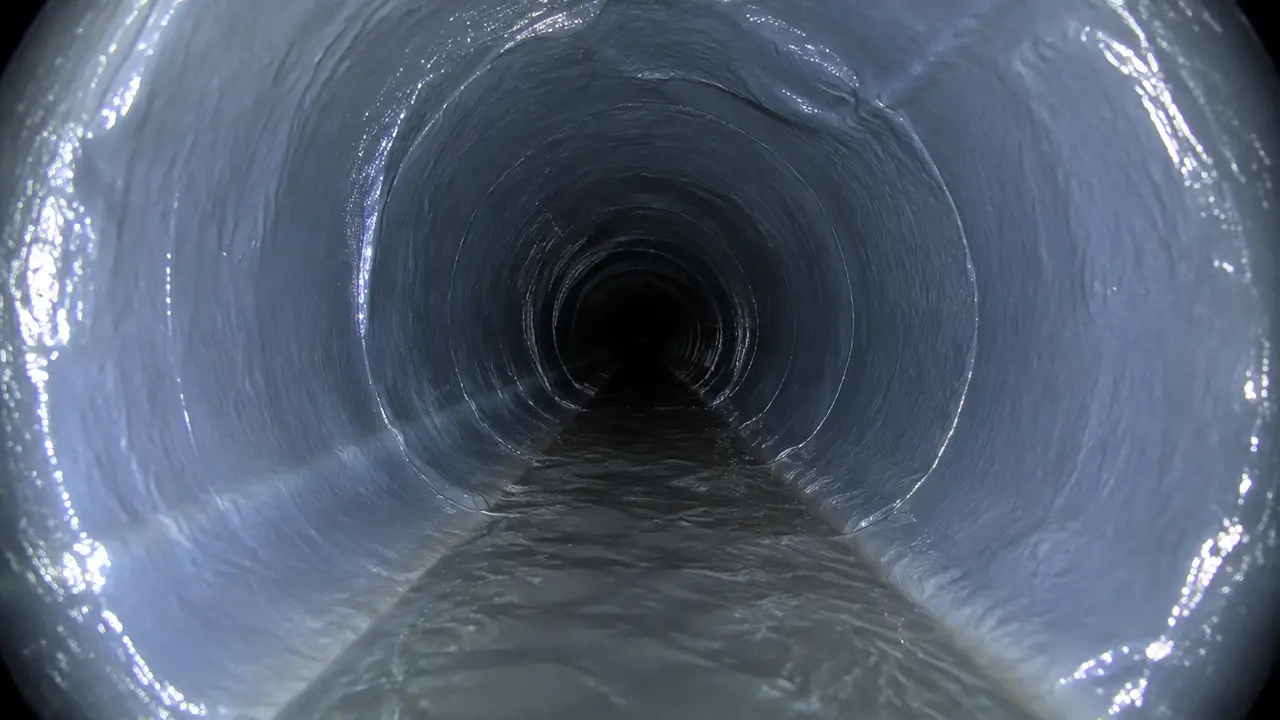
- On camera: expect a smooth, seamless section toward the street, often with a visible transition near the property line where lining ends.
- Roots: once the City segment is lined, roots that still show up on camera are almost certainly in the private segment, which makes clear whose problem they are.
- Future work on your side: tell any contractor the City side is lined, so a replacement or liner on the private side is joined properly at the transition.
- Records: note the CIPP date from the Service Line Lookup with your house records.
Owners in the most-relined communities can compare their street with the community pattern in the Community Sewer Atlas. The era guides explain the older codes being renewed: 1950s communities, the inner city and the clay tile belt. To have your side inspected or priced, request quotes.
FAQQuestions people ask
Is the City of Calgary relining sewer lines?
Yes. The City says it is retrofitting wastewater pipes vulnerable to backups with liners and describes a Sanitary Lateral Lining Program, a pilot administered by LiquiForce. Its service line data show 3,871 City-side segments relined from 2017 to 2025.
What does CIPP mean on my Calgary sewer record?
Cured-in-place pipe: the City segment of your service line has been lined with a new pipe formed inside the old one. The date shown is usually the relining date.
Will the City reline my side of the sewer line?
The City's program page does not say private portions are included. Its published ownership split makes the private segment the homeowner's responsibility, so ask 311 before assuming anything.
Which Calgary communities have the most relined sewer lines?
By share, Highwood (22.1%), Glendale and University Heights (19.9%), Rosemont (16.6%) and Crescent Heights (16.0%). By count, Huntington Hills, Mount Pleasant, Crescent Heights, Dover, Glendale and Highwood.
How old is Calgary's sewer system?
The City's service line record begins in 1901, and the City lists brick tunnels as a pre-1915 type of pipe used in sanitary repairs. Most of today's City-side service lines are younger: the median install year is 1995.
NETWORKGo deeper across the HAUSE Sewer network
What causes sewer backup, and how to tell which cause is yours
What causes sewer backup: roots, grease, wipes, sags, broken pipe, frozen lines and rain-overloaded city sewers, plus how to tell which one caused yours.
SewerInspector.caSewer pipe materials by construction era, and what each looks like on camera
Sewer pipe materials by era in Canadian homes: clay, cast iron, Orangeburg, concrete, ABS and PVC, how each one fails and what it looks like on camera.
SewerJetting.caHydro jetting weeping tile: how foundation drains are cleaned, and when they cannot be
Hydro jetting weeping tile explained: how foundation drains clog with silt, roots and iron ochre, how they are jetted from the sump, and when to replace them.